

Equilibar valves are high performance precision fluid control devices designed for the most complex fluid control challenges. Back-End-of-Line (BEOL) semiconductor fabrication and final packaging are arenas where Equilibar valves excel. Given the challenging nature of the semiconductor manufacturing process, it’s no surprise that Equilibar valves are used in a variety of these difficult fluid control applications. Within these systems, Equilibar valves are used in systems needing extremely precise control, compatibility with incredibly aggressive fluids, and incredibly fast response times.
When does Back-End-of-Line (BEOL) Happen in Chip Fabrication
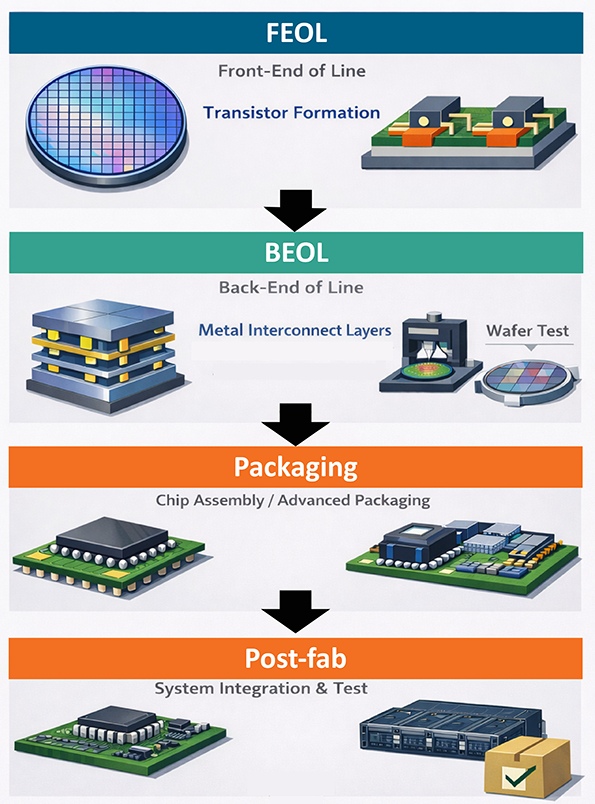
Semiconductor fabrication is generally split into three sections: Front-End-of-Line (FEOL), Back-End-of-Line (BEOL), and Advanced Packaging.
- FEOL is the first step in fabrication where individual components like transistors and logic gates are patterned into the wafer substrate
- BEOL is the manufacturing process in which metal interconnect layers are deposited onto the wafer, connecting the various transistors and other components
- Packaging is the process after chips are sliced from the wafer, when they are then integrated into their final package. Traditionally, this involves encapsulating the chip within a case for protection with electrical contacts that connect to a larger board. (eg. A CPU being packaged in a case with heat spreader and pins to connect to a motherboard) When multiple components are interconnected before traditional packaging/encapsulation, this is referred to as “advanced packaging”. (eg. “chiplets” integrated together onto an interposer board and packaged as a single “chip”).
- Post-fab is when the final product is integrated into larger components, like a motherboard, server tray, etc. Various tests may be done on the final product, such as thermal stress or performance testing.
Contact Equilibar for More Information
Back-End-of-Line (BEOL) process steps and fluid control
The transistors in the silicon wafer, which act as switches, must be connected via copper wires to form logic gates and circuits. This is done via a photolithography process, as described previously, but with the addition of a coating process to deposit alternating layers of copper and insulating material to connect various devices within the chip. These are typically referred to as interconnects, with “vias” being the connections between different layers. This is typically done through the Damascene process by which trenches are etched into an insulating layer and then filled with copper, with the excess above the trench being removed via CMP. Dielectric layers (like silicon dioxide) to reduce capacitance between wires and barrier layers (like tantalum nitride) to minimize copper diffusion are also applied. Producing each layer relies on a variety of thin film deposition techniques.
Thin Film Deposition
There are several common methods for thin film deposition. CVD (chemical vapor deposition) relies on chemical reactions between two precursor gases to create a film on the substrate. PVD (physical vapor deposition) forms a film via a sputtering process. ALD (atomic vapor deposition) refers to a film deposition of only one atomic layer at a time; this is done in a similar way to CVD with precursor gases, but with a more tightly controlled cycle of pulses and purges of precursor gases to deposit a layer exactly one atom thick with each cycle.
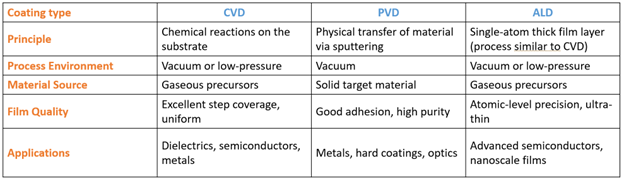
Table of Deposition Types Showing Differences and Similarities
Because many of these processes rely on aggressive precursor chemicals and high temperatures within the coating chambers, Equilibar regulators can be a good fit to put downstream on the vent line to maintain consistent chamber pressure.

Equilibar dome-loaded back pressure regulators and vacuum regulators for precise and responsive control for complex BEOL applications

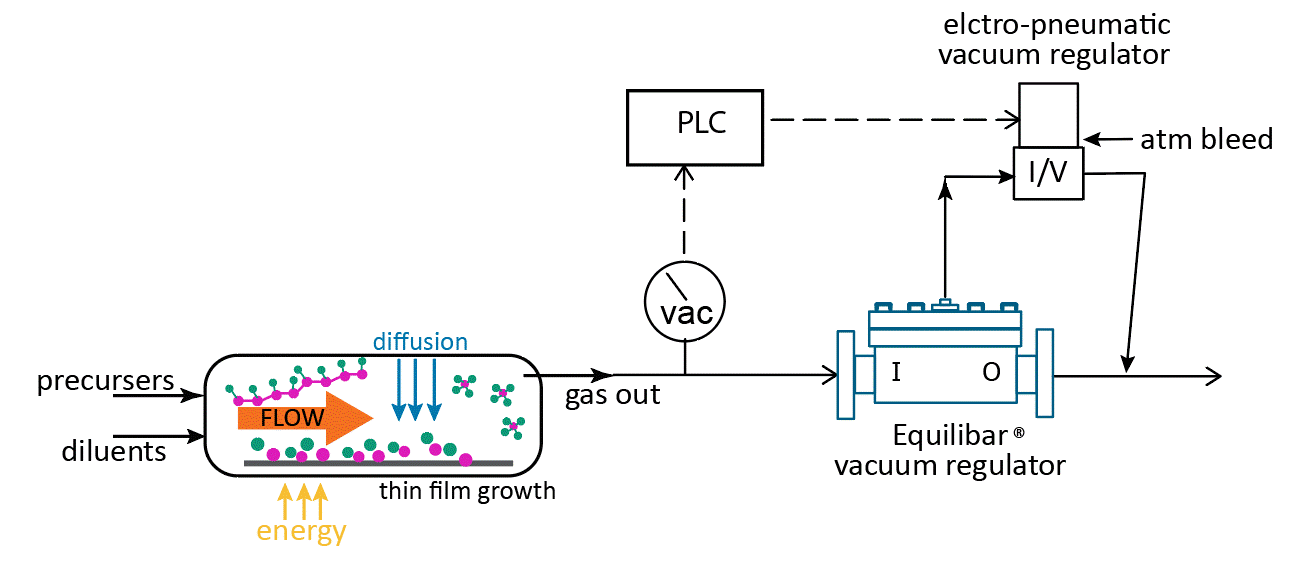
Example schematic of CVD coating chamber showing precurser gases forming a thin film on surface
Why choose Equilibar valves for thin film deposition chambers?
- Precise positive pressure or vacuum control – Precise chamber control is needed to maintain consistent film thickness – typically in the 0.1-10 torr range for CVD/PVD (0.01-1 torr for ALD processes). Equilibar regulators can control deep vacuum when used in a closed loop control setup
- High temperatures – while CVD chambers may be between 450-1000 C, the vacuum pump downstream, and any control valve in between, will not see temperatures this high. Still any, control valve will need to handle some level of elevated temperatures. For vacuum use, Equilibar valves with a polyimide (Kapton) diaphragm can work very well, allowing for sensitive control up to 300 C. Metal diaphragms can be used for higher temperatures and may work well for vacuum if coupled well with closed loop control.
- Ease of automation – With an electronic pilot, Equilibar regulators can be easily integrated into automated controls systems.
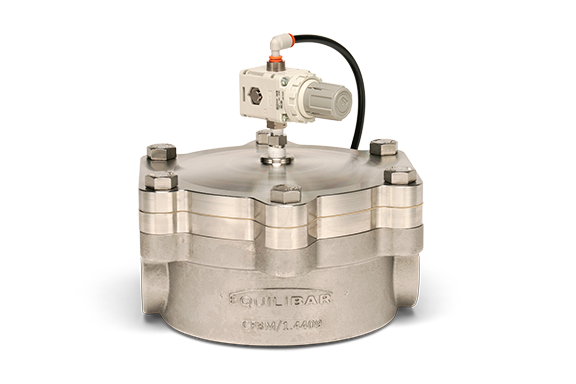
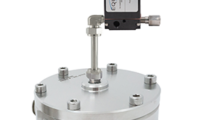
Equilibar EVR-IC 2″ stainless steel vacuum regulator with manual pilot regulator
Packaging, Advanced Packaging and Post-fab applications in semiconductor manufacturing
After all interconnects are completed and the top sealing layer is applied, the wafer is sliced into many dies – each of which becomes an individual chip. From here, depending on the type of chip being made, the fragile die is integrated into its final packaging. For a CPU, this may involve capping it with a heat spreader and soldering pins to the bottom which will connect to the end-user’s motherboard. For other components, the chip may be soldered to a larger printed circuit board (PCB). Regardless of the specific chip, this assembly process involves robotic “pick and place” machines.
Pick and Place Automation
Pick and place machines typically rely on heads with multiple suction cups to grab various parts being integrated onto a PCB. These machines move very quickly and precisely, requiring rapid shifts in vacuum level in order to grab and release parts at exactly the right moment. Equilibar vacuum regulators (EVRs) are a great solution for this application.
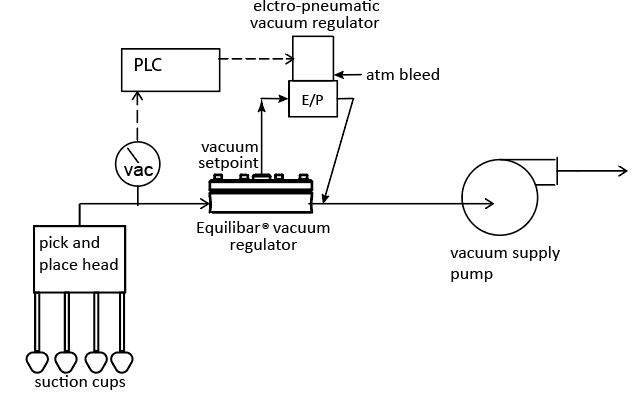
Why choose Equilibar EVR for pick and place automation?
- Fast response – As true regulators, Equilibar EVRs respond instantaneously to changes in flow and adjust their Cvs accordingly to maintain a constant pvacuum setpoint. For comparison, a traditional control valve can only adjust its Cv as fast as its control loop can measure a change in pressure and send a command to the positioner; a variable frequency drive on a vacuum pump has the same limitation, in addition to some “wind up” time as it changes speeds. Equilibar vacuum regulators do not need any external feedback to control upstream pressure.
- Wide operating flow range – Equilibar valves have extremely wide turndown ranges spanning 100:1 Cv range or greater. Depending on the size of the part being grabbed, the amount of flow into the system through the suction cups will change. The wide operating Cv range of the Equilibar EVR allows for precise control every time, regardless of the size of the part being grabbed.
- Isolation from downstream vacuum supply fluctuations – It is very common to have multiple pick and place machines running in parallel, tied to a shared vacuum header. Other vacuum-based machines like vacuum chucks for wafer handling, or vacuum conveyor belts may use the same shared header, causing the header vacuum level to change as machines start and stop. Equilibar EVR vacuum regulators isolate upstream processes from header fluctuations and adjust their Cv instantaneously to keep that upstream setpoint constant.
- Ease of automation – With an electronic pilot, Equilibar regulators can be easily integrated into automated controls systems.
Once the die is integrated into its final packaging, the finished chip or board undergoes a battery of quality assurance testing. This involves various continuity, functional, and performance tests. Of these tests, the most demanding ones from a fluid controls perspective are generally thermal tests.
Cooling Loops for Thermal Testing
A manufactured chip or board may be subjected to several different thermal tests, such as interconnect stress testing (IST) where boards are thermally cycled to ensure the copper interconnects do not fail as the metal expands and contracts. Chips may be tested under load at a variety of temperatures to ensure their output matches predicted values.
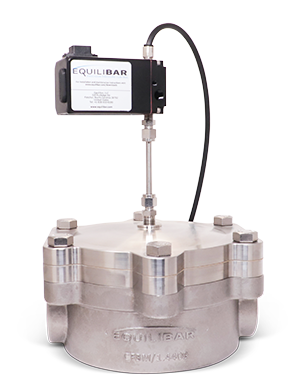
Equilibar vacuum regulator (EVR) for pick and place applications
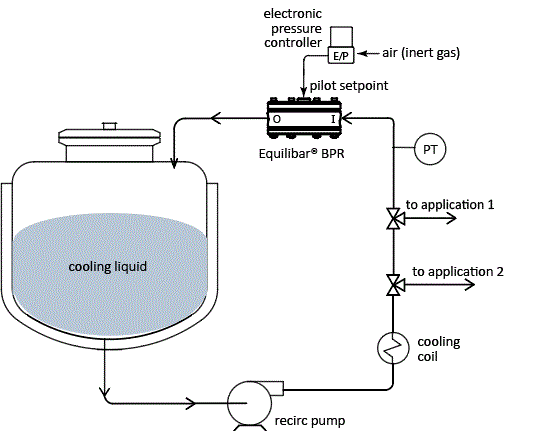
Liquid cooling loop with multiple application ports controlled by an Equilibar back pressure regulator
Why choose Equilibar valves for liquid cooling loops?
- Wide operating flow range – Equilibar valves have extremely wide turndown ranges spanning 100:1 Cv range or greater. When used in a recirculation setup like shown above, the amount of water being recirculated through our valve may be very little when all test stands are active, to the full capacity of the pump if no test stands are active. The wide rangeability of the Equilibar allows for precise pressure control within the entire operating range of the pump
- Ease of automation – With an electronic pilot, Equilibar regulators can be easily integrated into automated controls systems.
- Flexibility of control inputs – While Equilibar valves inherently function as back pressure regulators, they can be easily driven like control valves and used to control flow or even temperature if paired with feedback from the appropriate sensor. (ie. flowmeter or temperature sensor.)
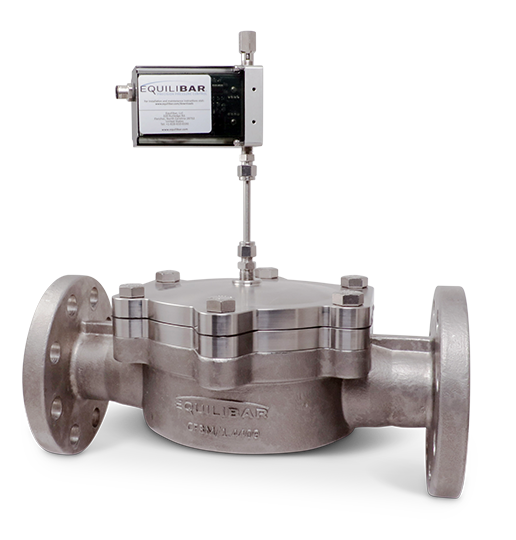
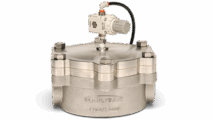
Equilibar IC Series back pressure regulator for liquid cooling loop control