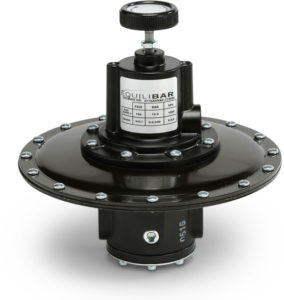


Series 3000 High Pressure Reducing Regulator
| Port Sizes: |
|
||||||||
| Typical Pressure Ranges: |
|
||||||||
| Body Material (Standard): |
|
||||||||
| Key Applications: |
|
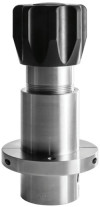
Series 3000 High Pressure Reducing Regulator
The high pressure 3000 Series pressure reducing regulators are single stage, piston sensed, variable delivery, pressure reducing
regulators, designed for inlet and outlet pressures up to 10,000 psig (689.5 bar(g)) and Cv 0.06.
3000 Series regulators are used to regulate a broad range of non-corrosive and corrosive media (based on materials of
construction). They are designed for increased serviceability and reliable operation with the integral 15 micron stainless steel
valve cartridge filter.
The Series 3000 is a self-relieving regulator that should be used only with compressed gases (not liquids). The Series
3000 is most often used to provide the pilot pressure signal to an Equilibar back pressure regulator, but can be used in any
application where relatively small volumes of compressed gas pressure must be controlled.
Series 3000 High Pressure Reducing Regulator
Series 3000 High Pressure Reducing Regulator
Series 3000 High Pressure Reducing Regulator
• Pilot operating Equilibar Back Pressure Regulators
• Research labs
• Manufacturing process
• Petrochemical plants
• Aircraft support system
Series 3000 High Pressure Reducing Regulator
Weight:
5.0 lbs (2.27 kg)
Dimensions:
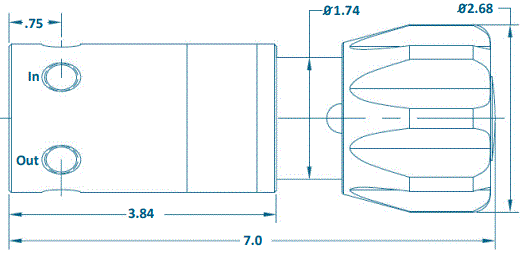
Fitting/Threads:
Standard: 1/4” female NPT
Series 3000 High Pressure Reducing Regulator
Related Products
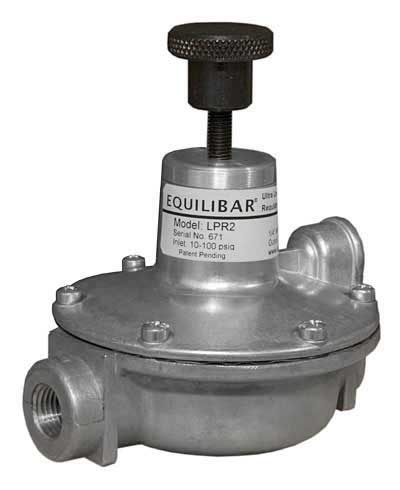
LPR2 Ultra Low Pressure Reducing Regulator