


The expansion at Equilibar continues at a rapid pace. Our goal at Equilibar is to exceed our customers expectations. The time, money, and energy invested in this expansion is a direct result of that commitment. At Equilibar, we are committed to providing the best back pressure regulators and vacuum regulators on the planet. Follow our progress as we work toward that goal.
High Efficiency Environmental Control
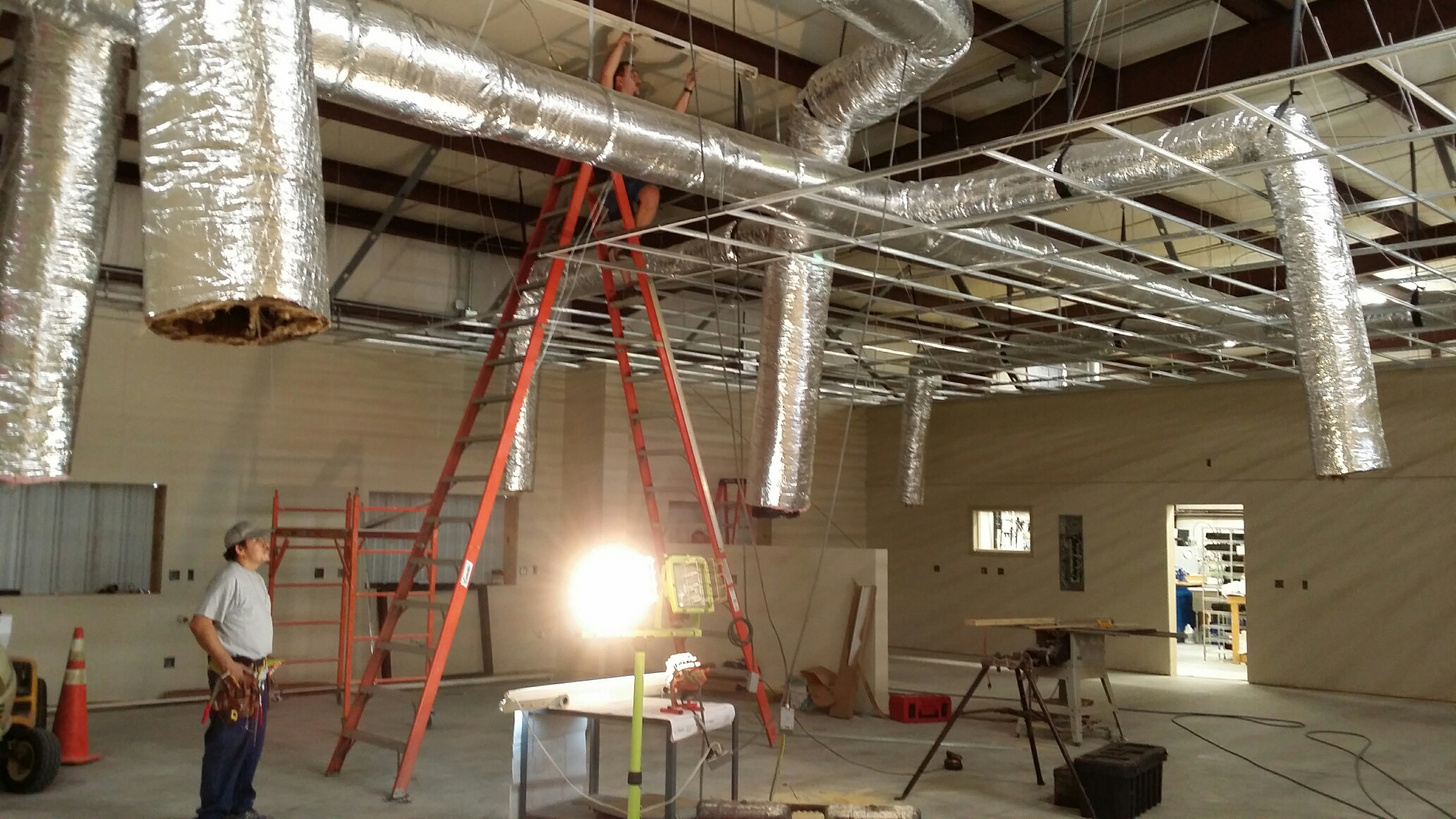
The photograph shows the new air handling ductwork including the air return lines and the air discharge lines. A high efficiency heat pump was selected as the most efficient means of heating and cooling. Equilibar’s home in the mountain region of Western North Carolina is blessed with a temperate climate that allows today’s modern high efficiency heat pump technology to provide 100% of the cooling and heating needs. In the photograph you can see the beginnings of the lattice work for the drop ceiling. The lowered ceiling height and the high R value insulation that will be applied on top both aid in the overall building efficiency. The ceiling height will be 11 feet 8 inches to maintain an open feel which will improve the work environment while providing a dramatic energy efficiency gain over the previous 16 to 22 foot sloped roof. Modern computer based thermostat controls will automatically modulate the temperature during non-working hours for further efficiency and include the ability to program a gentle warm up or cool down cycle at the beginning and end of the work week.