January 2015

Monthly Archives

  • Sponsoring website for Friends of DuPont Forest

    Equilibar is pleased to announce its sponsorship of the website of Friends of DuPont Forest, beginning 2015 with a commitment to preserving the rich natural heritage of the Appalachian Mountains. Known for its biodiversity, world-class waterfalls and extensive multi-use trail system, DuPont State Recreational Forest has always had a close connection to Equilibar. In 1996, Read More
  • Carbon Geo-Sequestration Research

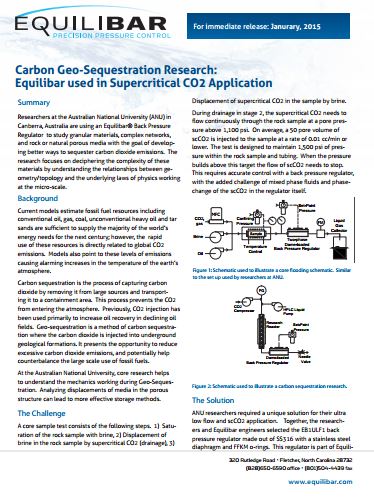
    Researchers at the Australian National University (ANU) in Canberra are using an Equilibar® Back Pressure Regulator to study granular materials, complex networks, and rock or natural porous media with the goal of developing better ways to sequester carbon dioxide emissions. The research focuses on deciphering the complexity of these materials by understanding the relationships between Read More

  • Higher Pressures for PTFE Regulators

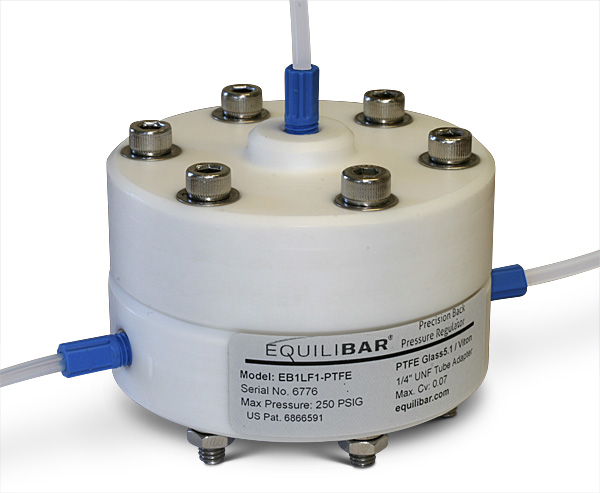
    2015: Equilibar recently expanded its 100% PTFE Teflon regulator options to allow higher pressure ratings in liquid fluid service only (not gas service). Using 1/8″ and 1/16″ PTFE tubing, these regulators can now be rated to 250 psig and 500 psig, respectively. These units use PTFE/Glass diaphragms and FFKM wetted O-rings. The LF1 back pressure Read More

  • Hastelloy C4 Regulator Used In Hydrofluoric Acid Research

    As part of an advanced thermodynamic study by a chemical manufacturer, Equilibar’s ZF Zero Flow back pressure regulator was custom fabricated from Hastelloy C4 and Kalrez orings to withstand exceptionally corrosive hydrofluoric and sulfuric acid mixtures. Read case study: Integrated Lab Solutions, Gmbh Successfully Uses Equilibar® Back Pressure Regulator For Challenging Study of Hydrofluoric Acid Phase Equilibria

Equilibar News
cooling system for ai

Differential Pressure Control for Liquid-Cooled Server Racks

The rapid adoption of AI over the past few years has led to a corresponding rapid shift in cooling methodology for servers used within data centers. Modern AI accelerators and high-performance computing hardware generate extraordinary amounts of heat — often exceeding 1,000 watts per module — which has driven the industry towards two-phase refrigerants and Read More

Read More