


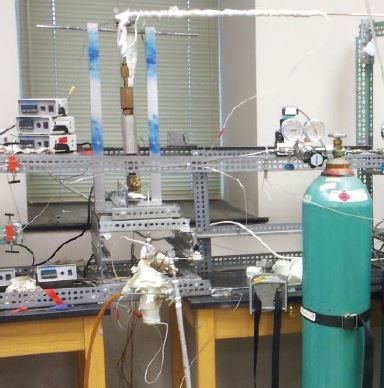
Researchers around the world use the Fischer-Tropsch Synthesis process to produce liquid fuels from alternative energy sources such as biomass and natural gas. At Auburn University in Alabama, one graduate student has incorporated an Equilibar back pressure regulator to dramatically improve their research of Fischer-Tropsch catalysts.
Background:
Fischer-Tropsch Synthesis was developed by Franz Fischer and Hans Tropsch in the early 1900s. It is a relatively complicated chemical process that converts syngas, a mixture of carbon monoxide and hydrogen, into hydrocarbons, including many of the compounds in traditional liquid fuels.
Syngas can be generated from almost any carbonaceous feedstock, so the Fischer-Tropsch process indirectly allows for the production of synthetic oil and fuel from resources such as coal, natural gas, and biomass.
David Roe, a graduate researcher in Auburn University’s Department of Chemical Engineering, is conducting research using Fischer-Tropsch Synthesis to generate gasoline and diesel length fuel compounds. Roe contacted Equilibar to improve the existing pressure control method to aid the effort in making this nearly century-old process more viable for today’s market.
See Full Customer Case Study
In the early twentieth century, Franz Fischer and Hans Tropsch developed the Fischer-Tropsch process to produce hydrocarbons from syngas, a mixture of carbon monoxide and hydrogen. The Fischer-Tropsch Synthesis process allows for the production of synthetic fuel from natural gas, coal, and biofuels.
Learn more about the process from the Department of Energy website.