
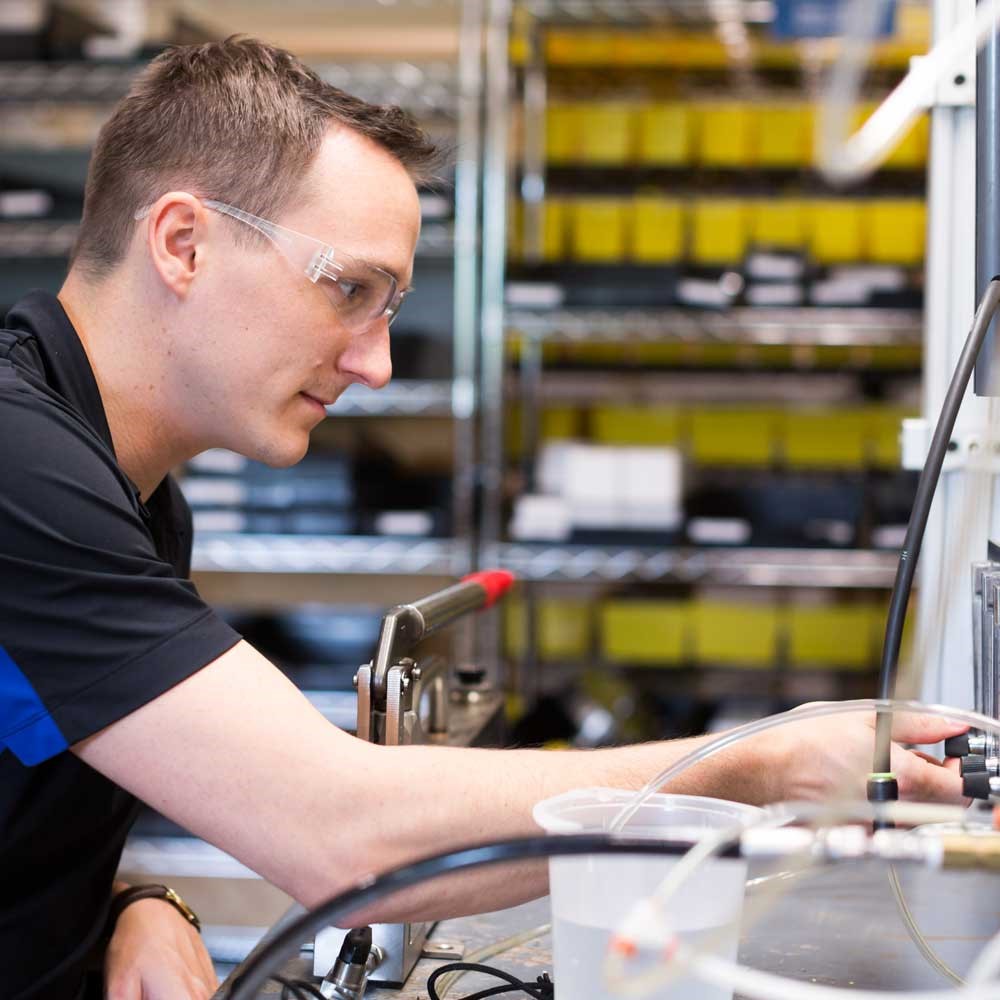
What are best practices for pharmaceutical fluid control?

  • Design Engineer Ryan Heffner

By Ryan Heffner

Modern pharmaceutical systems often require fluid control devices that easily control a range of flow rates, have high precision and respond in milliseconds to manage pulsating environments. Ryan Heffner, PE, has spent much of his career focusing on the specific fluid control needs of the pharmaceutical industry. In this cover story for Process Instrumentation magazine, he explains what to consider when choosing pharmaceutical fluid control devices. He gives three examples of real-world situations, including Active Pharmaceutical Ingredient (API) reactors, chromatography columns, and vacuum drying.

Equilibar News
how the Equilibar valve works in pressure reducing control

For complex applications, Equilibar® valves can provide reliable pressure-reducing control

Equilibar’s multiple orifice diaphragm technology has become a favorite for providing back pressure control, vacuum control, and flow control, but in certain applications it can also provide distinct advantages as a pressure reducing valve (PRV) that is able to perform where conventional valves cannot. Equilibar devices excel in pressure-reducing applications that push far beyond the Read More

Read More